AI- Assisted Research System
Written By Samay Bhurat
Independent Research System / Academic Workflow Design
Theme: AI-Assisted Research, Knowledge Management, Research Productivity, Excel Automation, Academic Writing, Evidence Organisation
Tools / Frameworks: ChatGPT, Excel, Power Query, Concept Matrix, Section Tags, Theory Tags, Coverage Analysis, Standard Operating Procedures, Research Workflow Design
Context:
This project is one of the most important parts of my portfolio because it was not a university assignment in the normal sense. It was a research system I developed independently to improve how I completed academic work.
Before building this system, my research process was inefficient. I would read articles, copy useful quotations and notes into one large Word document, and then try to write from that file later. Over time, those documents became overwhelming. Each assignment could produce 30,000 to 50,000 words of copied notes, extracts, quotations, and half-useful ideas. By the time I started writing, I had too much information and not enough structure (Figure 1).
This affected both speed and quality. I was spending too much energy collecting material and not enough energy thinking critically about it. I often felt tired before the real writing had even started.
To solve this, I developed an AI-assisted concept matrix system. The system helped me convert research from a messy collection of notes into a structured, searchable, section-based evidence database. Over time, this became a repeatable workflow that I could adapt to very different assignments, including entrepreneurship, international business, sustainability, and dissertation research.
The system boosted my grades upto 40% just by improving how I planned, organised, retrieved, and applied academic evidence.
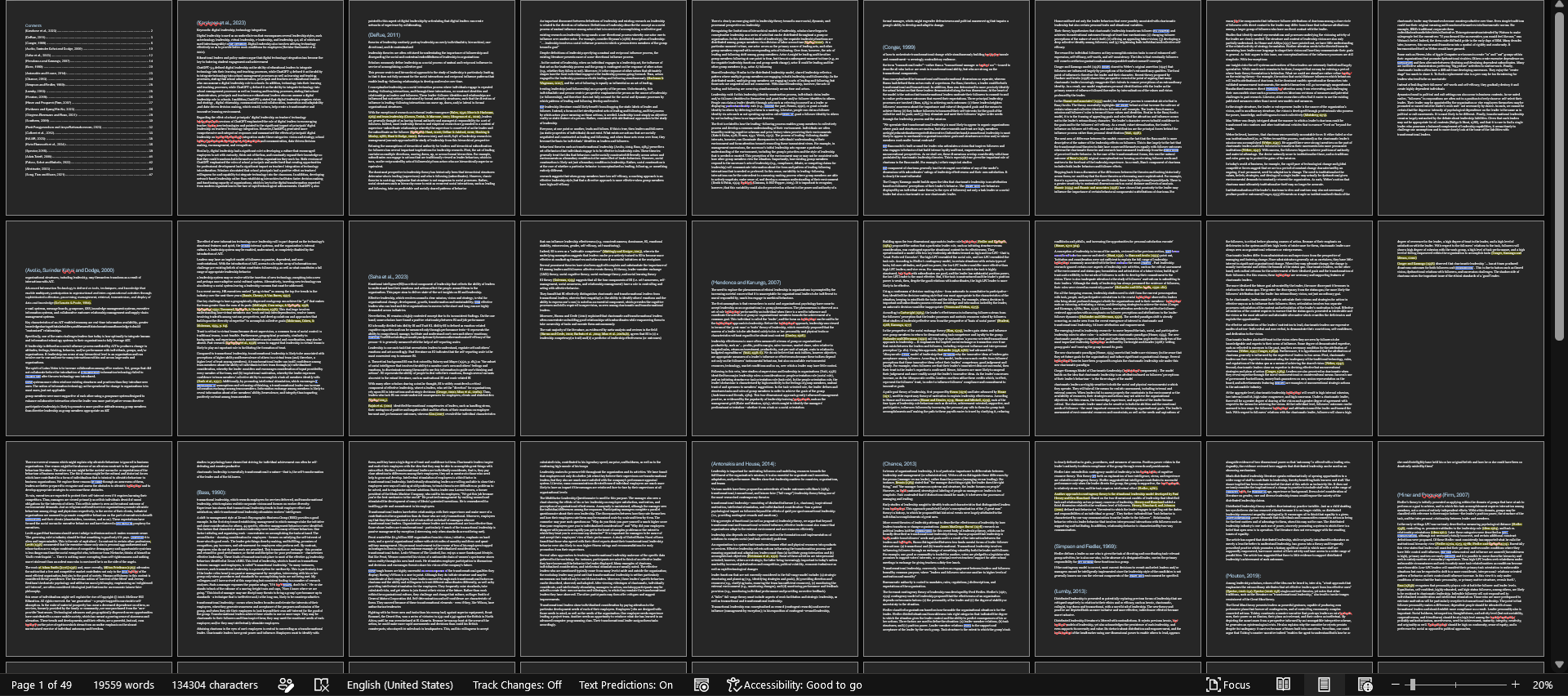
Figure 1: Unstructured Excerpts Dumping leading to confusion and erosion of critical thinking.
Problem:
The main problem was not that I lacked sources. The problem was that I had too much unstructured information.
My old process created three issues.
First, it made research retrieval difficult. Once all my notes were in one Word document, finding the right evidence for the right paragraph became slow and frustrating.
Second, it reduced critical thinking. Because the process involved copying so much material, I became mentally tired before I had properly questioned the evidence, compared theories, or developed my own argument.
Third, it created coverage problems. I could not easily tell whether I had enough evidence for each section of an assignment or whether I was over-researching one area while neglecting another.
I initially tried to solve this by using AI to generate code that would automatically pull and sort research data. However, this approach was too error-prone. It required strict rules, consistent formatting, and a clearer workflow. Automation alone was not enough. I needed a system.
The real problem therefore became:
How can I use AI and Excel to create a repeatable academic research workflow that improves structure, speed, traceability, and critical thinking without losing control of the research process?
My Role:
This was an independent system that I designed, tested, refined, and applied across multiple assignments.
I was responsible for identifying the weaknesses in my original research process, experimenting with AI-assisted workflows, building the Excel matrix structure, developing tagging rules, creating standard operating procedures, and testing the system on live academic projects.
At first, I used ChatGPT mainly to help generate code and formulas. However, I quickly realised that the output was only useful if the input structure was disciplined. This led me to develop a more controlled process based on a Masterfile, fixed columns, theory tags, section tags, Power Query sorting, and coverage analysis.
My role evolved from simply using AI to building a workflow around it. AI became a support tool for structure, search terms, formula development, troubleshooting, and process refinement, while I remained responsible for reading, selecting, paraphrasing, tagging, interpreting, and applying the evidence.
This distinction was important. The system was not designed to outsource academic judgement. It was designed to protect it.
Method:
The system developed over approximately a month through repeated testing and refinement.
The first stage was assignment structuring (figure 2). Before reading deeply, I used the assignment question and marking expectations to create a draft structure. This usually included sections such as introduction, literature review, methodology, findings, discussion, recommendations, or conclusion, depending on the assignment.
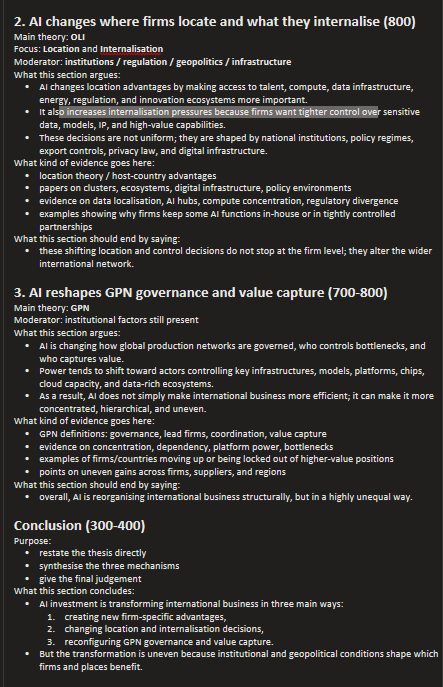
Figure 2: Example of how an assignment was broken into sections before research began.
The second stage was search-term generation (figure 3). I used AI to help generate keyword lists, theory terms, related concepts, and possible academic search phrases. This helped me create a core reading list more quickly. The goal was not to accept the sources blindly, but to improve the starting point for database and library searches.
The third stage was the Excel concept matrix. I built a Masterfile where each row represented one useful idea, concept, source extract, argument, or piece of evidence. Instead of dumping long quotations into Word, I paraphrased the useful point into a row and recorded the source so I could trace it back later.

Figure 3: Example of keyword generation aswell as cheat sheet for quick classification of data.
The main columns included:
Concept
Category
Evidence
Theory link
Source
How it helps my argument
Theory tags
Section tags
This changed the nature of my research. Each row had to justify why it mattered. I was no longer collecting information for the sake of collecting it. I was actively deciding how each piece of evidence could support, weaken, complicate, or contextualise my argument.
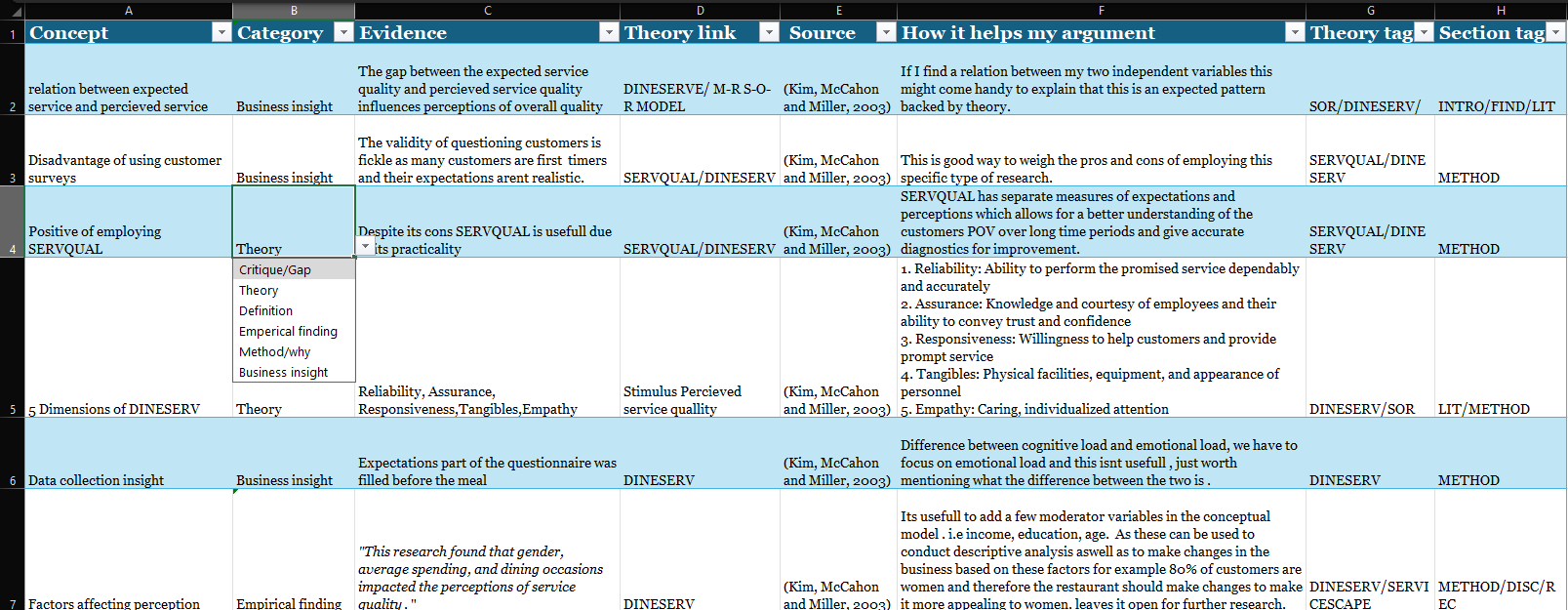
Figure 4: Masterfile showing concepts, evidence, theory links, sources, argument-use notes, theory tags and section tags.
The fourth stage was tagging (figure 4). I created strict tagging rules so that each row could be assigned to one or more theories and one or more assignment sections. Theory tags captured frameworks such as OLI, S-O-R, DINESERV, SERVQUAL, stakeholder theory, or other assignment-specific theories. Section tags identified where the evidence could be used, such as INTRO, LIT, METHOD, FIND, DISC, REC, or CONC.
The tags were deliberately simple, uppercase, and separated by slashes. This made them easier to sort, filter, and pull into different sheets.
The fifth stage was automated sorting (figure 5). I used Excel and Power Query to sort rows from the Masterfile into separate section sheets. This meant that evidence tagged for the introduction would appear in the introduction sheet, evidence tagged for the literature review would appear in the literature review sheet, and so on.
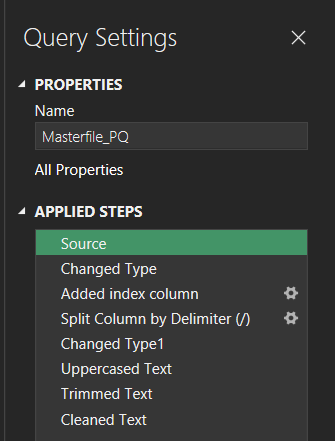
Figure 5: PowerQuery automating cleaning and sorting of data into each individual sheet.
This turned writing into a more focused process. Instead of scrolling through a huge Word document, I could work section by section with only the evidence relevant to that part of the assignment (Figure 6).

Figure 6: Example of evidence automatically sorted into a section sheet.
The sixth stage was coverage analysis (Figure 7). I created a coverage sheet to audit whether my theories and sections were properly supported. This helped me see whether I had too much evidence for one theory, not enough evidence for another, or weak coverage in a specific section.It also allowed me to analyse my references themselves, to filter them by year, by ideas and concepts and see which references I was overly relying on (Figure 8,9).
This was especially useful for theory-heavy assignments. It gave me a research dashboard showing whether the assignment was balanced before I started writing.
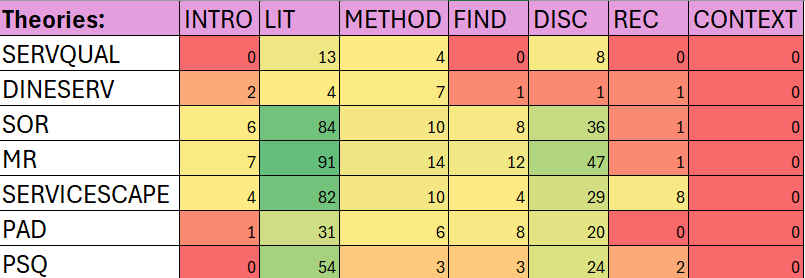
Figure 7: Coverage sheet showing theory usage across assignment sections.
Figure 8: Number of rows (information extracted) from specific references chart.
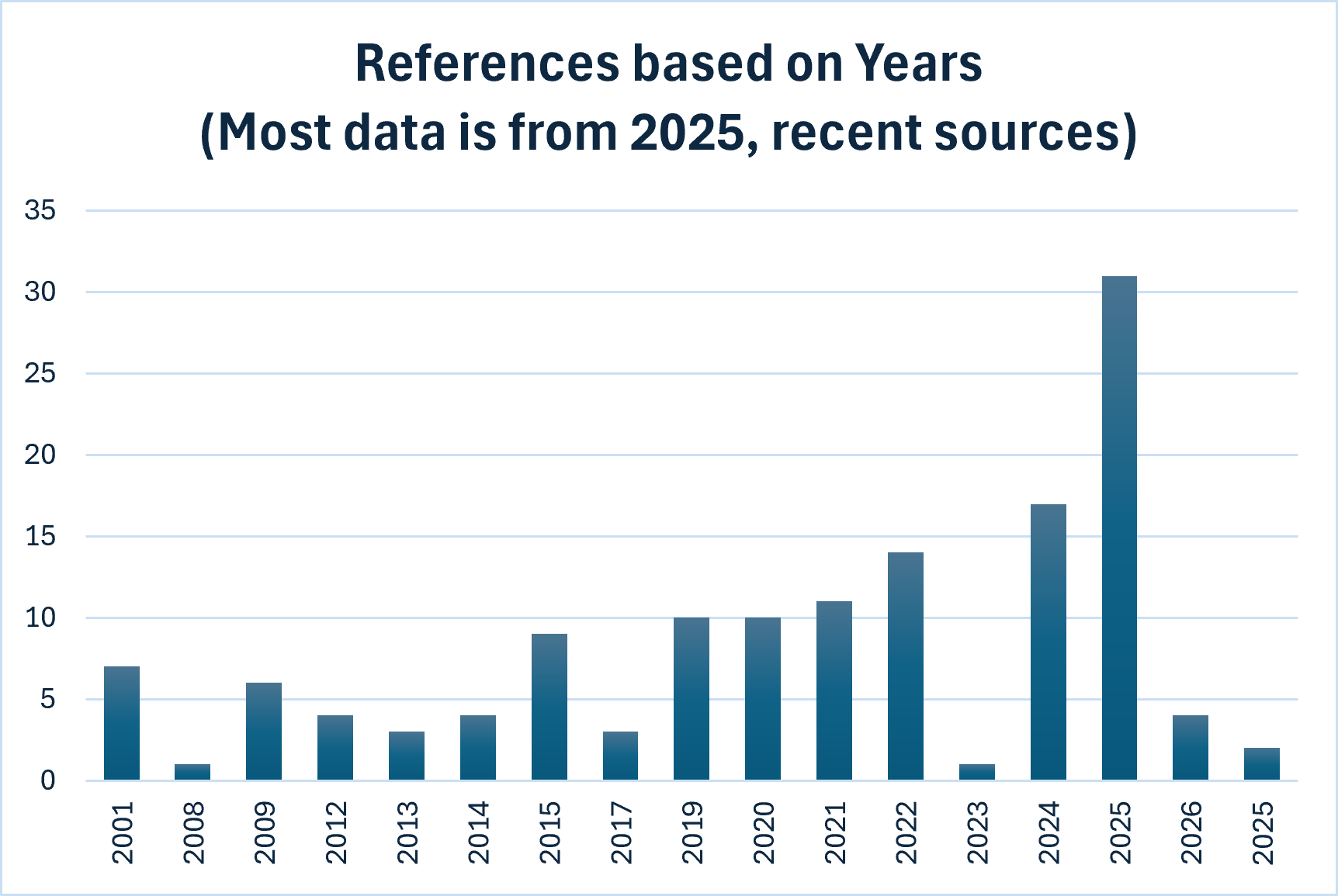
Figure 9: Graph showing how up to date the sources are keeping the research relevant to current patterns.
The final stage was section-by-section writing. Once extraction, tagging, and coverage analysis were complete, the writing process became much more manageable. I could open one section sheet, review the relevant rows, trace sources where needed, and build the argument from organised evidence.
At that point, the system became almost “plug and play.” The difficult part of research had already been organised into a usable structure.
Output:
The final output was a reusable AI-assisted research workflow and concept matrix system.
The system included:
A repeatable assignment structure process
A prompt-based search-term generation process
A Masterfile for research extraction
Strict tagging rules for theories and sections
Power Query / formula-based sorting into section sheets
A coverage analysis sheet
A standard operating procedure for adapting the system to new assignments
The system was applied across multiple assignments, including entrepreneurship, international business, project/dissertation work, and other research-heavy modules. Each version used the same core logic but adapted the section tags, theory tags, and structure to fit the assignment.
The most important improvement was that the system changed how I interacted with research. I no longer treated sources as large blocks of text to copy and store. I treated them as evidence units that had to be interpreted, categorised, and linked to a specific part of the argument.
This improved speed, reduced overwhelm, improved traceability, and made it easier to think critically while writing.
Figure 7: AI-assisted concept matrix workflow from assignment brief to final writing.
Academic Integrity and Control:
A key part of this system was maintaining human control over the research and writing process.
AI was used to support workflow design, search-term generation, formula development, structure planning, and troubleshooting. It was not used as a substitute for reading, judgement, interpretation, or final academic argumentation.
I remained responsible for selecting sources, reading the material, deciding what mattered, paraphrasing the evidence, assigning tags, building the argument, and writing the final submission.
This made the system more useful and more academically responsible. The goal was not to let AI complete the assignment. The goal was to use AI as a research operations tool so that I could spend more energy on analysis, synthesis, and critical thinking.
Skills Applied:
AI-assisted workflow design
Research process optimisation
Power Query
Excel formulas
Data sorting and filtering
Academic research
Source traceability
Coverage analysis
Standard operating procedure design
Prompt engineering
Evidence synthesis
Systems thinking
Process improvement
Productivity design
Key Insight:
The biggest insight from this project was that AI is most useful when it is embedded inside a disciplined system.
At first, I thought the answer was automation. I tried using AI to generate code that would pull and sort data automatically. However, that approach was fragile because research is messy. Sources are different, assignments are different, theories change, and extracted information does not always fit neatly into one category.
The breakthrough was realising that the system needed structure before automation.
Once I created standard columns, tag rules, section sheets, and coverage checks, AI became much more useful. It could help me generate search terms, troubleshoot formulas, create sorting logic, and refine the workflow. But the reliability came from the process, not from the AI alone.
The second insight was that organisation improves critical thinking. When my research was trapped in long Word documents, I felt overwhelmed and reactive. When it was broken into rows, tags, sources, and argument-use notes, I could compare ideas more clearly. I could see gaps. I could question whether a source helped, weakened, or complicated my argument.
The system did not just make research faster. It made the thinking cleaner.
Reflection:
This project changed how I work academically.
Before developing the concept matrix, research felt like the most draining part of the assignment process. I would collect too much material, lose track of what mattered, and then struggle to turn the research into a coherent argument. The volume of information made me less creative because I was spending too much energy managing the material.
The concept matrix solved that problem by turning research into a structured database. Each source extract became easier to find, filter, trace, and use. The ability to search within Excel, filter by section, filter by theory, and check coverage made the entire writing process less stressful.
The system also helped me become more strategic. Instead of reading endlessly, I could see when a section had enough evidence. Instead of guessing whether a theory was well supported, I could check the coverage sheet. Instead of copying long paragraphs, I paraphrased the important point and linked it to the argument.
This improved my confidence as a researcher. It helped me move from simply gathering information to managing knowledge.
If I were to improve the system further, I would build a cleaner dashboard showing source count, theory coverage, section balance, and unused evidence. I would also create a more polished template that could be shared with other students or adapted into a Notion, Airtable, or Power BI workflow.
Overall, this project demonstrated my ability to identify a personal workflow problem, design a repeatable system, use AI responsibly, apply Excel automation, and improve academic performance through process innovation.
Professional Value:
This project demonstrates my ability to build systems, improve workflows, use AI responsibly, manage large volumes of information, create structured research processes, and turn ambiguity into a repeatable method.
It also shows that I do not only use tools passively. I can design a process around them, test it, improve it, and apply it across different types of work.
For a selected excerpt or demonstration of the concept matrix system, please contact me at: samaybhurat@gmail.com
